Swiss Gambling Laws and Their Effect on Winning Strategies for Mobile Bingo Enthusiasts
Geschrieben von Mara Friedrich · 24.8.2026
Swiss Gambling Laws and Their Effect on Winning Strategies for Mobile Bingo Enthusiasts
Switzerland maintains a tightly controlled gambling environment through the Federal Act on Gambling that took effect in 2019 and continues to shape access for mobile bingo players into 2026. The legislation requires all online operators including those offering bingo to hold a Swiss license issued by the competent federal or cantonal authority and prohibits unlicensed foreign platforms from serving residents. Data from regulatory reports show that licensed operators must meet strict standards for game fairness, player protection measures, and tax obligations that directly influence payout structures and bonus availability on mobile bingo applications.
Core Provisions of the Federal Framework
Under the current rules operators must locate their servers in Switzerland or ensure equivalent data protection standards while submitting regular audits to verify random number generators and return-to-player percentages. Mobile bingo enthusiasts therefore encounter only platforms that display clear licensing seals and limit certain promotional mechanics such as unlimited deposit bonuses or cashback offers that were common before the law changed. Research from the Swiss Federal Gaming Board indicates that these restrictions have reduced the number of available mobile bingo variants by approximately 30 percent since 2021 yet have increased transparency around prize distribution and withdrawal times.
As August 2026 nears authorities continue to evaluate adjustments to cross-border enforcement protocols and digital payment verification processes that affect how quickly players can fund accounts and claim winnings on licensed apps. Those who track compliance updates note that stricter identity checks now apply to all mobile sessions exceeding certain thresholds which adds steps to account setup but reduces fraud incidents according to published enforcement statistics.
Impact on Player Strategies and Game Selection
Winning approaches for mobile bingo shift under these constraints because players can no longer access offshore sites that sometimes advertise higher jackpots or more frequent bonus rounds. Instead enthusiasts focus on optimizing play within the licensed ecosystem by studying the certified return-to-player rates that each operator must publish. One documented case involved a group of players who compiled weekly payout reports from multiple Swiss-licensed bingo rooms and identified consistent patterns in session timing that aligned with lower competition levels during weekday mornings.
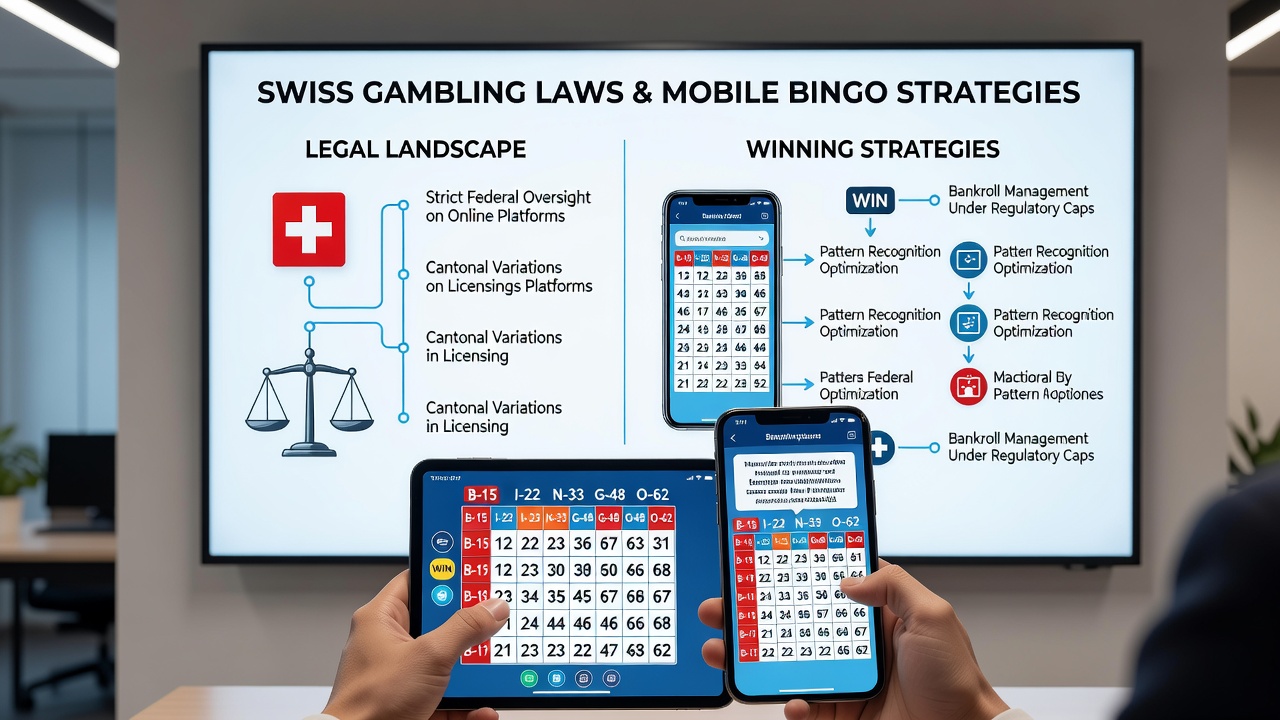
Bankroll management becomes more critical when bonus funds carry wagering requirements capped by regulation and when maximum bet limits apply to certain progressive bingo variants. Players often adopt slower ticket purchase rates to stretch playtime across multiple draws rather than chasing rapid successive games that could trigger session limits designed to promote responsible participation. Figures from industry monitoring groups reveal that average session duration on compliant mobile bingo applications has risen by 12 percent since the licensing regime stabilized while the frequency of large single-session wins has remained statistically stable.
Technological and Compliance Adaptations
Licensed developers integrate geofencing and real-time verification tools that prevent access from unlicensed networks and ensure all mobile transactions route through approved Swiss financial institutions. These technical safeguards eliminate certain payment methods that previously allowed faster deposits yet introduce brief processing delays that some players incorporate into their timing strategies. Observers note that individuals who schedule deposits during business hours benefit from quicker verification because support teams handle fewer concurrent requests compared with evening peaks.
Academic studies conducted at Swiss universities have examined how regulatory caps on advertising spend influence player acquisition patterns and found that word-of-mouth referrals within licensed communities now drive a larger share of new mobile bingo sign-ups than paid promotions. This shift encourages enthusiasts to join established player forums where experienced participants share verified data on draw frequencies and prize pools rather than relying on unverified promotional claims from outside the regulated market.
Conclusion
Swiss gambling legislation creates a defined operating space for mobile bingo that rewards methodical approaches based on published statistics and compliance features instead of promotional incentives. Players who adapt their strategies to licensed platform constraints including verified payout rates and session management tools maintain consistent engagement while operating within the legal boundaries established by federal and cantonal authorities. Continued monitoring through 2026 will determine whether further refinements to verification processes or game offerings alter these established patterns.